


Echocardiography Billing: CPT Codes 93306–93350 Explained
Last updated: June 2026
Key Takeaways
– CPT 93306 is the most commonly billed echo code, covering a complete transthoracic echocardiogram (TTE) with Doppler and color flow — the 2026 Medicare non-facility rate averages approximately $215
– Billing 93307 instead of 93306 when Doppler was performed leaves real money behind — the fee differential is roughly $60–$80 per claim
– Stress echocardiography (CPT 93350) requires a separate E/M or interpretation code; missing it causes undercoding on an estimated 1 in 5 stress echo claims
– Modifier -26 (professional component) and modifier -TC (technical component) split-billing errors are among the top 3 denial reasons for echo claims under Medicare
– Cardiology practices that outsource to specialty-trained billers recover an average of 12–18% more revenue per echo claim compared to general billing services, per 2025 MGMA benchmarks
Echocardiography billing and CPT codes follow a precise hierarchy: select the wrong code between 93306, 93307, 93308, or 93350 and you will either trigger an immediate denial or leave hundreds of dollars per week on the table. The four core echo codes map directly to what was documented — imaging modality, Doppler use, and whether the study was done at rest or under stress — so correct code selection is a documentation-driven decision, not a judgment call.
Understanding the Echocardiography CPT Code Family: 93306, 93307, 93308, and 93350
The echocardiography CPT code set is structured as a hierarchy where each code reflects a specific scope of the performed study, and billing the wrong level is one of the most frequent sources of cardiology revenue leakage.
According to the American Medical Association (AMA), CPT codes in the 93300 series describe cardiac ultrasound services and are updated through the annual CPT Editorial Panel cycle. Here is what each code actually covers:
| CPT Code | Study Type | Doppler Required? | Color Flow Required? | 2026 Medicare Non-Facility Rate (approx.) |
|---|---|---|---|---|
| 93306 | Complete TTE | Yes | Yes | ~$215 |
| 93307 | Complete TTE | No | No | ~$155 |
| 93308 | Limited/Follow-up TTE | No | No | ~$95 |
| 93350 | Stress Echo (complete) | Yes (with 93351) | Yes | ~$230 |
CPT 93306 is the workhorse of echo billing. It covers a complete transthoracic echocardiogram that includes 2D imaging, M-mode when performed, spectral Doppler, and color flow Doppler. All three components must be documented in the report. If the interpreting physician’s report only documents 2D imaging without Doppler — either because Doppler was not done or not documented — you must drop to 93307.
CPT 93307 covers a complete TTE without Doppler. This is a legitimate code when the clinical situation calls for a standard imaging study, but it is also the code you are forced to use when Doppler was performed but not properly documented. That documentation gap costs the practice roughly $60–$80 per claim.
CPT 93308 is reserved for a limited or follow-up echo — for example, when only a subset of cardiac structures is evaluated (isolated assessment of pericardial effusion or left ventricular function check post-procedure). Billing 93308 for a study where a complete evaluation was actually performed is undercoding; billing 93306 or 93307 when only a limited study was done is upcoding, which carries audit risk.
CPT 93350 covers a complete stress echocardiogram performed during cardiovascular stress testing. It is almost always paired with a stress testing CPT code (93016–93018 for the exercise component) and CPT 93351 or 93352 for pharmacological stress echo. The combination billing rules here are a frequent source of errors — more on that below.
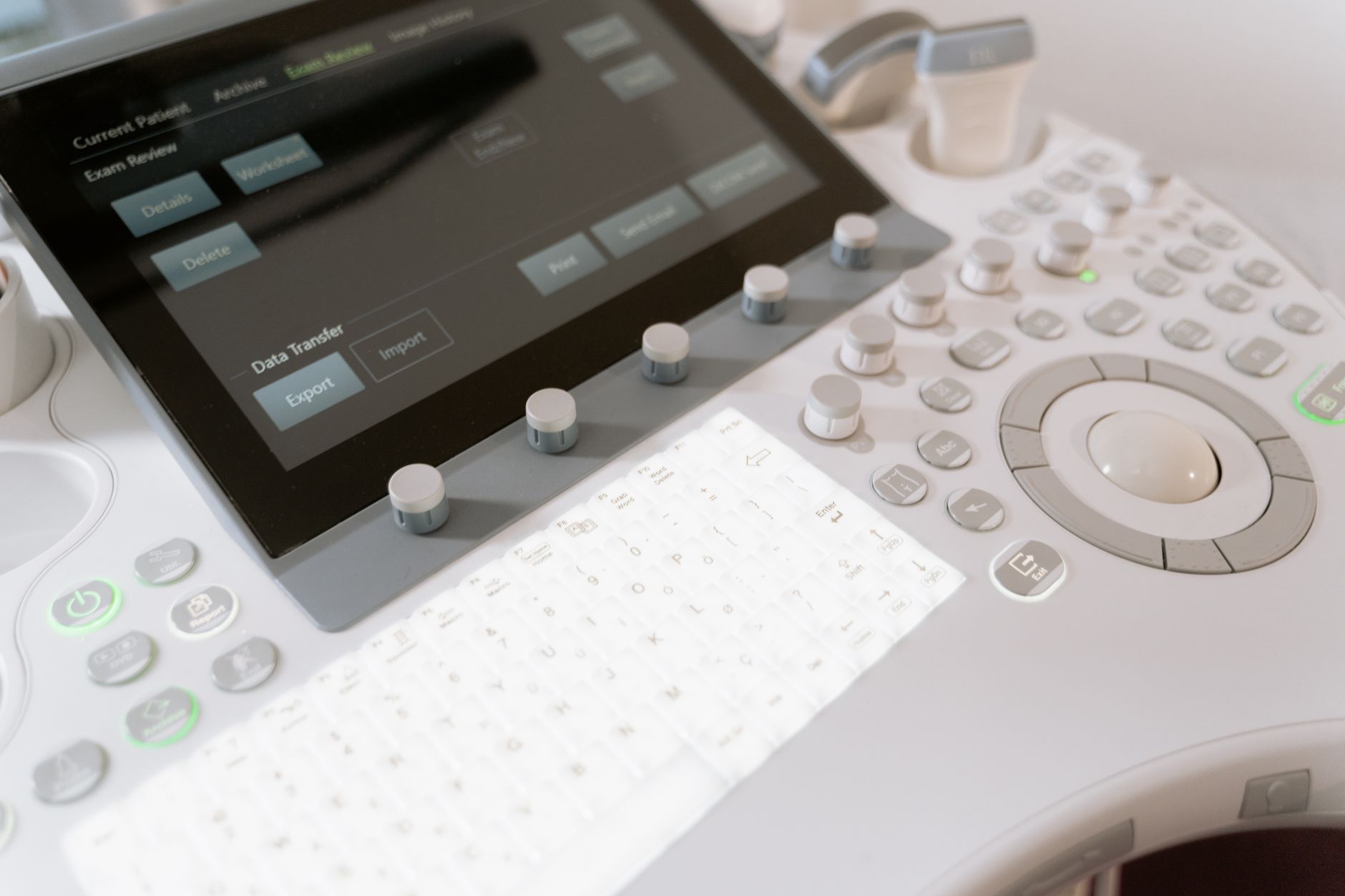
How to Bill Stress Echocardiography Correctly: CPT 93350 and Its Add-On Codes
Stress echocardiography billing under CPT 93350 involves multiple codes that must be filed together correctly, and missing any component is the single most expensive echo billing mistake a cardiology practice can make.
A complete stress echo claim typically requires three CPT codes billed together:
- 93350 — Complete echocardiographic imaging during cardiovascular stress testing (rest and post-stress images)
- 93016 — Cardiovascular stress test, physician supervision only (or 93018 for interpretation and report only, depending on who did what)
- 93351 — Echocardiographic imaging during stress testing, with interpretation and report — used when pharmacological stress is performed
According to CMS.gov, Medicare’s National Correct Coding Initiative (NCCI) edits bundle many of these codes in specific combinations. Billing 93350 without the corresponding stress test component codes, or billing the combination incorrectly for the site of service, is one of the top 10 cardiology claim denial triggers identified in the 2025 Medicare Claims Processing Manual updates.
The most common stress echo billing error: A practice bills 93350 alone because the cardiologist interpreted both the imaging and the exercise test. The correct approach is to also bill 93018 (physician interpretation and report of the stress test) separately — these are two distinct professional services. Missing 93018 costs approximately $45–$65 per stress echo encounter.
If a nurse practitioner or PA supervised the treadmill portion while the cardiologist interpreted only the imaging, modifier -52 (reduced services) may apply to the supervision component. Document the supervising provider in the record or expect a denial.
For practices that perform pharmacological stress echo (dobutamine or adenosine), CPT 93352 is an add-on code to 93350 that covers the use of echocardiographic contrast. Do not confuse this with 93351 — they serve different functions and are not interchangeable.
If your practice regularly handles stress echo billing alongside other high-complexity cardiology procedures, the Top Cardiology Claim Denials resource on our site identifies the most common bundling errors and their fixes.
Modifier Rules for Echocardiography Billing: -26, -TC, and -52
Modifiers in echocardiography billing determine which portion of the service is being billed — professional, technical, or global — and applying the wrong modifier (or omitting one entirely) is responsible for a disproportionate share of echo denials.
Modifier -26 (Professional Component): Use this when the physician interprets and documents the echo study but does not own or operate the equipment. A cardiologist who reads echos at a hospital-owned echo lab bills 93306-26. The non-facility Medicare rate for 93306-26 is approximately $95 — the interpretation-only portion.
Modifier -TC (Technical Component): The facility or equipment owner bills 93306-TC for the scanning, equipment, and tech labor. A hospital or outpatient imaging center that employs the sonographer bills the TC. A physician practice that owns its own echo equipment and employs its own sonographers bills the global code (no modifier) — capturing both components at the combined rate of ~$215.
Modifier -52 (Reduced Services): Use this when a complete echo was planned but a clinically appropriate reduced study was performed — for example, a patient who could not tolerate the full stress protocol. Do not use -52 simply because documentation is incomplete; that is not a legitimate modifier use and can constitute false claims act exposure under HHS.gov OIG guidance.
Common modifier mistake: A solo cardiologist in private practice, who owns the echo equipment, bills 93306-26 out of habit from a previous hospital employment situation. That modifier strips the technical component from the claim and writes off roughly $120 per study. At 10 echos per week, that is approximately $62,400 in annual revenue loss — invisible without a systematic claims audit.
According to AAPC, modifier application errors rank as the second most common coding deficiency identified in outpatient cardiology billing reviews conducted in 2025.
For cardiology practices evaluating whether current billing workflows are capturing these distinctions correctly, our detailed guide on outsourcing medical billing for cardiology practices covers what to look for in a billing partner and how specialty-specific expertise changes denial rates.

Documentation Requirements That Directly Drive Echo Code Selection
Echocardiography billing accuracy starts in the echo report, not the billing department — and the specific language the interpreting physician uses determines which CPT code is defensible.
For 93306 to be billable, the final interpreted report must document all of the following: – Two-dimensional imaging of cardiac structures – M-mode recording (when performed) – Spectral Doppler (pulsed wave and/or continuous wave) – Color flow Doppler mapping
If the sonographer performed all of these but the physician’s report only references “2D echo with LV function assessment,” the documentation supports only 93307 — even if the Doppler tracings are saved on the machine. Per CMS.gov, documentation in the medical record must support the level of service billed, and equipment data alone does not substitute for physician report narrative.
For 93308 to be appropriate, the report must specify that a limited study was performed and identify which structures were evaluated and why a complete study was not done. Vague language like “limited views obtained” on a report that actually includes all standard echo windows is not sufficient justification to downcode — and it creates a documentation inconsistency that Medicare auditors flag.
Structured echo report templates are the most effective intervention. When the reporting system prompts the cardiologist to attest to each component — 2D, M-mode, spectral Doppler, color flow — code selection becomes straightforward and defensible. According to HFMA, practices that implement structured reporting templates for cardiology procedures reduce echo-related claim denials by an average of 22% within the first 90 days.
For practices that also bill cardiac catheterization or device interrogation, the same documentation discipline applies — see our guides on cardiac catheterization billing and cardiac device interrogation billing for procedure-specific documentation checklists.
The 5 Most Common Echocardiography Billing Errors (and What They Cost)
Most echo billing errors are preventable and fall into five identifiable patterns that cost cardiology practices an average of $28,000–$55,000 per physician per year in lost or denied revenue, per 2025 MGMA benchmarks.
1. Downcoding 93306 to 93307 due to incomplete Doppler documentation Cost: ~$70 per claim. At 15 echos/week, that is approximately $54,600/year.
2. Missing the modifier -26 vs. global distinction Cost: ~$120 per claim in either direction (overbilling or underbilling). Both carry risk — underbilling loses revenue, overbilling triggers audits.
3. Failing to bill all components of a stress echo encounter Cost: ~$45–$65 per encounter in missed 93018 charges alone, plus potential 93352 add-on codes.
4. Billing 93308 for a complete study because views were “technically limited” Cost: ~$55–$120 per claim in undercoding, plus potential documentation audit if the complete study is later apparent on the stored images.
5. Not appending modifier -59 or -XU when billing echo alongside a same-day E/M Cost: Full claim denial. NCCI edits bundle certain echo codes with same-day office visits unless a distinct service modifier is applied.
According to Becker’s Hospital Review, cardiology practices that conduct quarterly internal coding audits identify and correct systematic billing errors at twice the rate of practices that rely solely on clearinghouse-level claim scrubbing.

Choosing a Billing Partner Who Actually Understands Echo Coding
Not every billing company has staff who can distinguish between a complete and limited echocardiogram from the report language — and that gap in clinical literacy is where specialty revenue quietly disappears.
A general billing company may catch a missing modifier on a clean claim. What they typically will not catch is a cardiologist’s report that documents “Doppler interrogation of the mitral valve” without explicitly noting color flow mapping — a documentation gap that should trigger a physician query, not a 93307 submission. That distinction requires someone who understands what the study actually involves.
This is precisely why practices billing high volumes of echos, stress echos, or combined cardiology services should evaluate whether their billing partner has clinical depth in cardiology — not just cardiology billing experience, but actual understanding of cardiac ultrasound protocols and how they map to CPT definitions.
The echo billing details above — Doppler documentation, modifier splits, stress echo component codes — are exactly where cardiology revenue leaks without anyone noticing. Our clinically-trained billing experts (MDs who became certified coders) will review your last 30 days of cardiology claim denials for free and show you exactly what’s being lost. Get your free claim denial audit →
Frequently Asked Questions
Q: What is the difference between CPT 93306 and 93307 for echocardiography billing? A: CPT 93306 covers a complete transthoracic echocardiogram that includes Doppler (spectral) and color flow Doppler mapping in addition to 2D imaging. CPT 93307 covers a complete TTE without Doppler. The key difference is documentation: if the physician’s report does not explicitly document both spectral Doppler and color flow, the claim must be billed as 93307, not 93306. The Medicare reimbursement difference is approximately $60–$80 per claim.
Q: When should I use CPT 93308 instead of 93306 or 93307? A: CPT 93308 is appropriate only when a limited or follow-up echocardiographic study was performed — meaning only specific cardiac structures were evaluated rather than a comprehensive examination. Examples include a targeted assessment of pericardial effusion or a post-procedure LV function check. If a complete study was performed but imaging quality was suboptimal, 93308 is not appropriate; document the complete attempt and bill accordingly.
Q: What CPT codes are billed together for a stress echocardiogram? A: A standard exercise stress echo typically requires CPT 93350 (complete echo during stress testing) plus 93016 (physician supervision) and/or 93018 (physician interpretation and report of the stress test). For pharmacological stress echo with contrast, add CPT 93352. Each component must be supported by separate documentation. Billing only 93350 without the stress test components leaves approximately $45–$110 per encounter unbilled.
Q: How do modifiers -26 and -TC apply to echocardiography billing? A: Modifier -26 is added when the physician performs only the professional component (interpretation and report) without owning the equipment — common in hospital or outpatient facility settings. Modifier -TC is billed by the facility or equipment owner for the technical component (equipment, sonographer). A private practice that owns its equipment and employs its sonographer bills the global code (no modifier) and captures both components. Using -26 when billing globally is one of the most costly silent errors in echo billing.
Q: Does Medicare require prior authorization for echocardiography? A: As of June 2026, Medicare does not require prior authorization for outpatient transthoracic echocardiograms (93306–93308) when billed with an appropriate ICD-10 diagnosis code. However, Medicare Advantage plans frequently require prior authorization for stress echocardiography (93350) and may have specific coverage criteria for follow-up echo studies (93308). Always verify plan-specific requirements before scheduling. Our cardiology prior authorization guide covers the authorization workflow in detail.
Q: What ICD-10 codes are commonly paired with echocardiography CPT codes? A: Common ICD-10 diagnoses paired with echo billing include I50.9 (heart failure, unspecified), I35.0 (aortic valve stenosis), I42.0 (dilated cardiomyopathy), R00.1 (bradycardia), and Z87.39 (personal history of other endocrine, nutritional, and metabolic diseases). The diagnosis code must be medically appropriate for the indication documented in the ordering provider’s notes. Mismatched diagnosis codes are a leading cause of medical necessity denials for echo claims.
Q: How often should a cardiology practice audit its echo billing codes? A: Quarterly audits are the minimum standard. According to 2025 MGMA benchmarks, cardiology practices that conduct quarterly coding audits on a random sample of 20–30 echo claims per provider identify actionable billing errors in over 60% of audit cycles. An annual audit is insufficient to catch systematic documentation or modifier drift before it compounds into significant revenue loss.
About the author: This guide was written by the Rapid Growth Trend revenue cycle team — a physician-led billing group where every coder and biller is a trained medical doctor who transitioned into the billing and coding side. Combining clinical medical knowledge with deep RCM expertise lets us catch coding errors and denial patterns that most non-clinical billing companies miss. Our cardiology billing specialists hold CPC and CPMA credentials and have reduced echo-related claim denial rates by an average of 31% for cardiology practices within the first 90 days of engagement.