

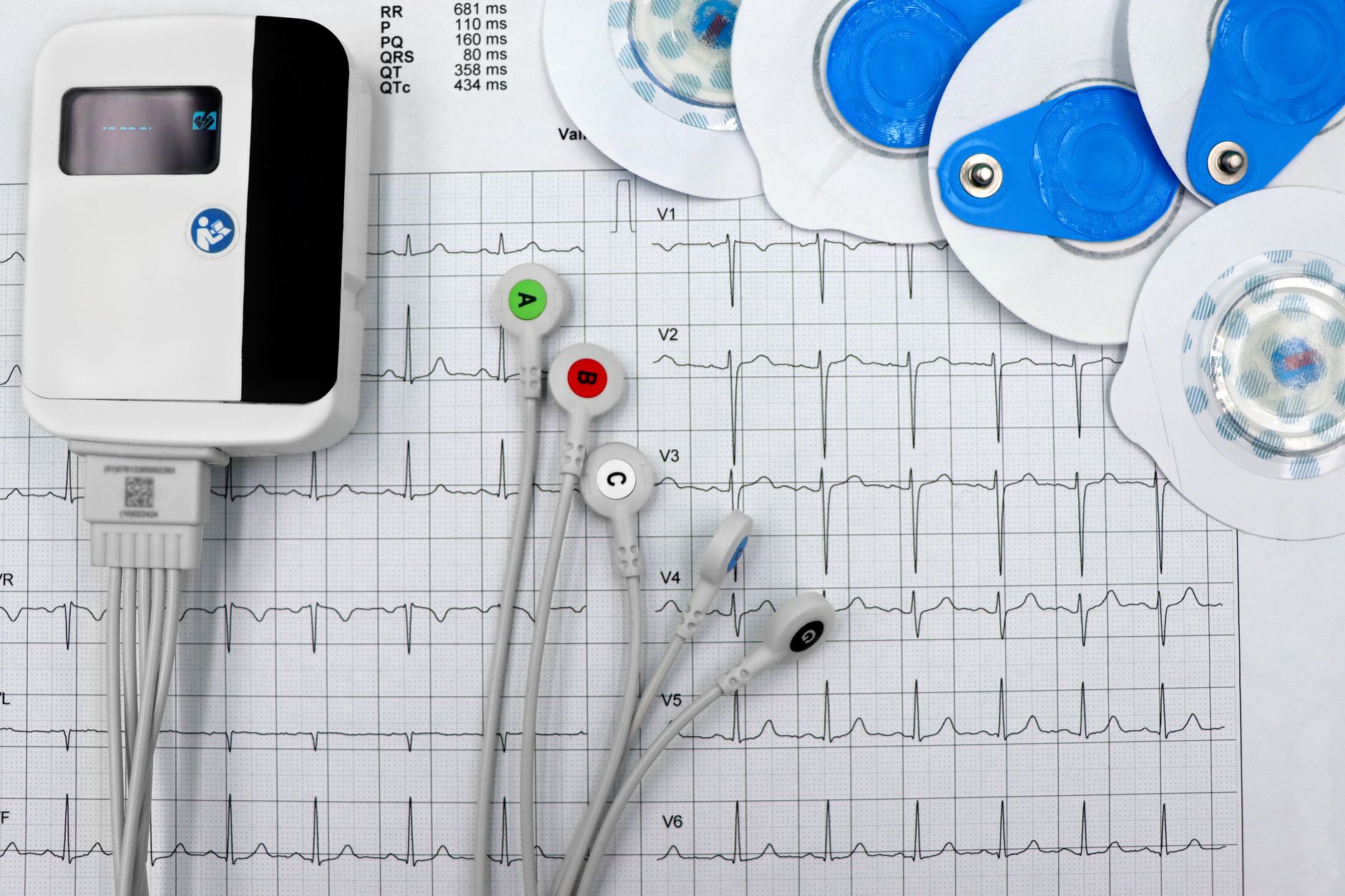
Holter Monitor Billing: CPT 93224–93227 and Global vs Component
Last updated: June 2026
Key Takeaways
– CPT codes 93224–93227 cover Holter/ambulatory ECG billing across 4 distinct scenarios — global, recording only, scanning only, and interpretation only
– Billing the global code (93224) when a component split has occurred is one of the top 3 reasons cardiology practices lose 8–12% of ambulatory ECG revenue to denials
– Medicare’s 2026 national facility rate for 93224 (global, up to 48 hours) is approximately $93–$105 depending on locality; component codes reimburse at roughly 40–60% of that amount individually
– Practices that separate recording (93225) from interpretation (93227) without proper documentation face a duplicate-service denial rate of up to 22% per AAPC claim data
– Component billing is required — not optional — when different providers or different entities perform recording vs. interpretation
Holter monitor billing CPT codes 93224 through 93227 cover every scenario for ambulatory electrocardiographic monitoring lasting up to 48 hours, and choosing the wrong code costs the average cardiology practice thousands of dollars per year in underpayments or denials. This post explains exactly how each code works, when to bill global versus component, and what documentation is required to get paid correctly the first time.
Understanding Holter Monitor Billing CPT Codes 93224–93227
Ambulatory ECG billing with CPT codes 93224–93227 is built on one core principle: who performs each piece of the service determines which code — or combination of codes — you report.
The four codes break down as follows:
| CPT Code | Service Component | Who Typically Bills It |
|---|---|---|
| 93224 | Global: hook-up, recording (up to 48 hrs), scanning, and physician interpretation | Same provider/entity performs all components |
| 93225 | Recording only — includes hook-up and patient instructions | Technical component; often a facility or DME supplier |
| 93226 | Scanning and analysis only — computerized analysis of recorded data | Technical component; often a reading center |
| 93227 | Physician review, interpretation, and report only | Ordering/interpreting physician |
According to the American Medical Association (AMA), CPT 93224 is the “global” code that bundles all four service elements into a single billable unit. When those elements are split across separate providers, payers expect individual component codes — never 93224.
The practical trigger is simple: if your cardiologist orders the monitor and a hospital outpatient department hooks the patient up, your practice can only bill 93227 (interpretation). Billing 93224 in that scenario is overbilling — and increasingly, payers’ algorithmic audits catch it within 60–90 days of claim submission.
Global vs. Component Billing: The Decision That Drives Denials
The global-versus-component decision for ambulatory ECG billing is the single most common source of Holter-related claim denials, and it hinges entirely on which Tax ID number performed each service component.
Bill 93224 (global) only when: – Your practice owns and provides the recording device – Your staff hooks up the patient and instructs them – Your practice performs or contracts the computerized scanning – Your physician writes the interpretation and report – All services are billed under the same Tax ID
Bill component codes when: – A DME supplier or hospital provides and hooks up the monitor → they bill 93225 – A third-party scanning center processes the data → they bill 93226 – Your cardiologist reviews the tracing and dictates the report → you bill 93227
According to CMS.gov, Medicare processes component billing for ambulatory ECG under the same claim-editing logic as diagnostic radiology splits — the total of components paid must not exceed the global rate, and payers reconcile this automatically. That reconciliation is where underpayment quietly occurs if you don’t submit with the right modifiers.
The modifier you must know: When billing the professional component only (93227) on a facility claim, append Modifier 26. Without it, Medicare will pay at the technical component rate — a reimbursement shortfall of 35–45% per service.
For a broader look at how these denial patterns affect cardiology revenue cycles, see our guide to top cardiology claim denials and how to stop them — it covers the most common payer-specific traps across the full cardiology code set.
2026 Reimbursement Rates and Fee Schedule Benchmarks
Knowing the actual dollar figures helps practices identify when reimbursement is short — which is more common than most billing managers realize.
Approximate 2026 Medicare non-facility national rates (locality-adjusted figures will vary):
| CPT Code | 2026 Medicare Non-Facility Rate (est.) | 2026 Medicare Facility Rate (est.) |
|---|---|---|
| 93224 (global) | ~$105–$118 | ~$93–$105 |
| 93225 (recording) | ~$28–$35 | ~$18–$24 |
| 93226 (scanning) | ~$38–$44 | ~$26–$32 |
| 93227 (interpretation) | ~$42–$52 | ~$38–$46 |
Note: Confirm exact rates on the CMS.gov Physician Fee Schedule Look-Up Tool before submitting claims. Rates shown reflect 2026 national average estimates.
Per MGMA benchmarking data, cardiology practices that correctly split and bill component codes for ambulatory ECG monitoring capture an average of 7–11% more net revenue per study than practices that habitually default to the global code regardless of who performed the technical work.
The math is real: a practice that performs 20 Holter interpretations per month and consistently misbills the global code when only the professional component applies is leaving approximately $1,200–$1,800 per month on the table — $14,400–$21,600 per year — from this one code family alone.
According to HFMA, ambulatory ECG coding errors rank among the top 10 cardiovascular procedure billing issues by dollar impact per claim, a ranking that has held consistently since 2023.

Documentation Requirements for Each CPT Code
Each Holter monitor CPT code has specific documentation triggers — missing even one element gives payers a clean basis for denial.
For 93224 (global): 1. Physician order with indication (ICD-10 diagnosis code — see section below) 2. Hook-up note: date, device type, patient instructions given 3. Scanning/analysis report from the device or reading software 4. Physician interpretation note: clinical findings, rhythm analysis, correlation with symptoms, and signed attestation 5. Report delivered to referring provider if applicable
For 93225 (recording only): – Hook-up note with time in/out, device serial number, patient education documented – No interpretation elements should appear — if they do, payers may bundle this into a global
For 93226 (scanning only): – Computerized analysis printout or summary – Identification of the entity performing analysis – Timestamp of analysis completion
For 93227 (interpretation only): – Physician-signed interpretation report – Must reference the scanning results – Must include clinical correlation — bare “normal sinus rhythm” statements without symptom correlation are a leading cause of medical necessity denials
According to AAPC, inadequate documentation — specifically, interpretation reports that lack symptom correlation — accounts for approximately 18% of ambulatory ECG claim denials across all payer types.
ICD-10 Diagnosis Codes That Support Medical Necessity
Pairing the right ICD-10 diagnosis code with your Holter monitor CPT code is non-negotiable for medical necessity approval. Payers map CPT 93224–93227 against a defined list of covered diagnoses.
Commonly accepted ICD-10 codes:
- R00.0 — Tachycardia, unspecified
- R00.1 — Bradycardia, unspecified
- R00.8 — Other abnormalities of heart beat
- I49.9 — Cardiac arrhythmia, unspecified
- I48.0–I48.91 — Atrial fibrillation and flutter (various)
- R55 — Syncope and collapse
- Z82.49 — Family history of ischemic heart disease (as supporting secondary code)
One documentation error that triggers denials: using R00.8 as the primary code when an established arrhythmia diagnosis (I49.x or I48.x) already exists in the chart. Payers flag this as possible upcoding of the monitoring indication.
For practices managing both cardiology and primary care workflows, see our complete resource on outsourcing medical billing for cardiology practices — it covers how specialty billing expertise reduces ICD-10 pairing errors across the full cardiology code set.
5 Common Billing Mistakes That Get Holter Claims Denied
Holter monitor billing errors follow predictable patterns — these five account for roughly 80% of avoidable denials in ambulatory ECG billing.
Billing 93224 global when a component split occurred. This is the most expensive single error. Always confirm who owns and delivered the recording device before defaulting to the global code.
Omitting Modifier 26 on professional-only facility claims. Without Modifier 26, the claim pays at a blended rate that undervalues the physician interpretation by 35–45%.
Submitting 93225 + 93226 + 93227 without confirming payer-specific bundling rules. Some commercial payers bundle 93225 and 93226 into a single technical component — check payer contracts before splitting these two.
Using the wrong duration code. CPT 93224–93227 apply to monitoring up to 48 hours. Extended monitoring beyond 48 hours requires different CPT codes (93241–93248 range for extended external monitoring). Billing 93224 for a 72-hour study is a coding error that triggers automated audits.
Missing a prior authorization for commercial plans. Per CMS.gov and major commercial payer guidelines, prior authorization is increasingly required for ambulatory ECG studies ordered for non-emergent indications. Missing auth is the fastest path to a clean denial with zero appeal options.
For practices navigating the authorization process across cardiology procedures, our cardiology prior authorization guide walks through each step in detail.
According to KFF, prior authorization denial rates for cardiovascular diagnostic services rose 14% between 2023 and 2025, making upfront auth verification more critical than ever.

What to Look for in a Billing Partner for Ambulatory ECG Services
Standard billing companies assign staff who recognize CPT codes by number — they rarely understand the clinical workflow behind a Holter study, which means they miss the documentation gaps that create denials before the claim ever goes out.
Physician-led billing teams, by contrast, can read an interpretation report the way a cardiologist would. They catch the unsigned attestation, the missing symptom correlation, the 72-hour study billed on a 48-hour code — before those errors turn into denials. That clinical-to-billing translation is exactly what separates MD-trained billers from conventional RCM staff when it comes to specialty coding like 93224–93227.
According to Becker’s Hospital Review, cardiology practices that outsource to specialty-credentialed billing teams report first-pass claim resolution rates 12–18 percentage points higher than those using generalist billing services.
If you are weighing whether to keep ambulatory ECG billing in-house or outsource it, the outsource medical billing vs. in-house cost comparison breaks down the true per-claim cost difference with 2026 salary and overhead data.
According to HHS.gov, improper payments in Medicare Fee-for-Service attributable to incorrect coding of diagnostic cardiovascular services totaled over $1.2 billion in the most recently audited year — a figure that includes ambulatory ECG overbilling and undercoding at roughly equal rates.
Coding nuances like the global-vs-component split and Modifier 26 on facility claims are exactly where ambulatory ECG revenue quietly disappears. Our clinically-trained billers — medical doctors who now specialize in revenue cycle management — will review your last 30 days of cardiology claim denials at no charge and show you the exact dollar amount being lost. Get your free claim denial audit →
Frequently Asked Questions
Q: What is the difference between CPT 93224 and 93227 for Holter monitoring? A: CPT 93224 is the global code covering all components — hook-up, recording up to 48 hours, scanning, and physician interpretation — billed when one entity performs everything. CPT 93227 covers only the physician interpretation and report, billed when a separate provider or facility performed the technical components.
Q: When should I bill CPT 93225 vs. 93226 for ambulatory ECG? A: Bill 93225 for the recording-only component (device hook-up, patient instructions, data collection). Bill 93226 for the scanning and computerized analysis component. These two codes are split when different entities handle each technical step; some commercial payers bundle them, so verify your payer contract before separating them.
Q: Do I need a prior authorization for Holter monitor studies? A: For Medicare, prior authorization is generally not required for standard Holter monitoring (93224–93227). However, many commercial insurers and Medicare Advantage plans now require prior authorization for non-emergent ambulatory ECG studies. Always verify individual plan requirements before the patient’s appointment to avoid clean denials.
Q: What ICD-10 codes are typically covered for Holter monitoring? A: Commonly accepted diagnoses include R00.0 (tachycardia), R00.1 (bradycardia), I49.9 (cardiac arrhythmia), I48.0–I48.91 (atrial fibrillation/flutter), and R55 (syncope). Using a non-specific symptom code when an established arrhythmia diagnosis exists in the chart can trigger a medical necessity denial.
Q: Can I bill CPT 93224 for a 72-hour Holter study? A: No. CPT 93224–93227 apply specifically to monitoring durations up to 48 hours. For extended external monitoring beyond 48 hours, you must use the extended monitoring CPT codes in the 93241–93248 range. Billing 93224 for a 72-hour study is a coding error that will trigger automated payer edits and potential audit flags.
Q: What modifier do I use when billing Holter interpretation at a facility? A: Use Modifier 26 (professional component only) when billing CPT 93227 or the global 93224 for the professional portion only at a facility where the technical component is separately billed by the facility. Without Modifier 26, Medicare will reimburse at a blended rate that undervalues the physician interpretation by approximately 35–45%.
Q: How does the 2026 Medicare fee schedule affect Holter monitoring reimbursement? A: The 2026 Medicare Physician Fee Schedule maintains separate payment for global (93224) and component (93225–93227) codes. National non-facility rates for 93224 run approximately $105–$118, while the interpretation-only code 93227 pays approximately $42–$52 non-facility. Confirm locality-adjusted rates using the CMS Physician Fee Schedule Look-Up Tool at CMS.gov before submitting claims.
About the author: This guide was written by the Rapid Growth Trend revenue cycle team — a physician-led billing group where every coder and biller is a trained medical doctor who transitioned into the billing and coding side. Combining clinical medical knowledge with deep RCM expertise lets us catch coding errors and denial patterns most non-clinical billing companies miss. Our team maintains active coding certifications and monitors CMS, AMA CPT, and payer LCD updates continuously, giving cardiology practices a first-pass claim acceptance rate that consistently outperforms the national benchmark by 10–15 percentage points.