

Medical Billing Services for Small Practices – Precision, Compliance, and Affordability
- The lowest percentage in the United States
- doctor-for-doctor service
- highest accuracy, lowest denials
- focused medical billing solutions for small businesses and private practices
At RGtrend, we are a team of medical doctors who have experienced firsthand the frustrations of inaccurate coding, claim denials, and revenue loss. Despite paying high percentages (6-9%) to medical billing companies, we faced the same challenges you’re dealing with now and honestly we can relate with you. We know how overwhelming it can be to juggle patient care while struggling with billing inefficiencies that eat into your practice’s revenue and time.
We’ve been in your shoes, and that’s why we came up with the company idea and created a doctor-for-doctor service. Our unique medical billing services for small practices approach leverages our medical background to reduce errors, minimize denials, and ensure accuracy and compliance. We don’t just understand your pain—we’ve lived it, and we’re here to solve it.
As doctors, we know your time is limited. That’s why we’ve designed this page to give you everything you need to make an informed decision quickly. Here’s what you’ll find:
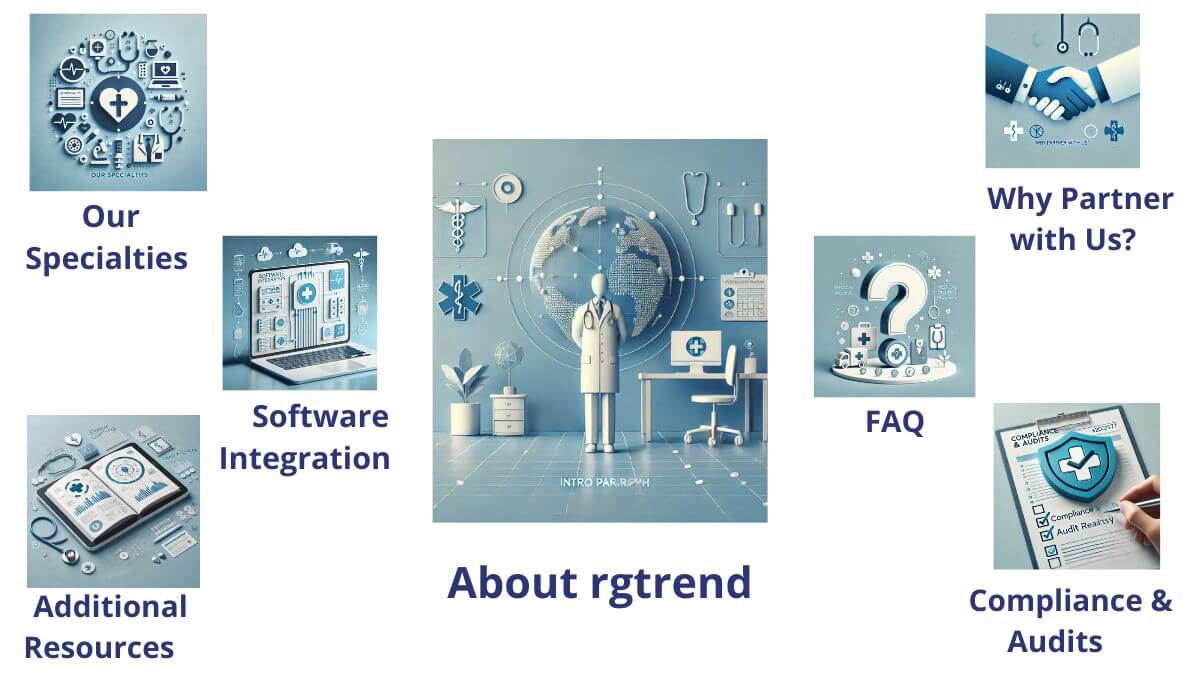
Limited time?

About Rgt medical billing services :
At RGTrend, we specialize in medical billing services for small practices, addressing the unique challenges faced by clinics, private practices, and small healthcare businesses.
Read more
rgtrend Founded by physicians, our team bridges the gap between clinical expertise and billing accuracy. Whether you need affordable billing solutions, HIPAA-compliant electronic health records (EHR) integration, or complete billing services tailored to your specialty, we ensure maximum revenue retention and minimal errors.

Why Small Practices Trust rgtrend Medical Billing Services?
Discover the benefits of working with a team that truly understands your medical billing challenges.
Read more
- Physician-Led Team: Doctors who understand clinical workflows and medical billing for small practices.
- HIPAA & Compliance: Rigorous adherence to billing compliance and regulations.
- 24/7 Support: Real-time claim tracking via electronic health records (EHR) integration.
- Proven Results: Featured in Medical billing services for small practices reviews for our 95% claim acceptance rate.
- Software Expertise: Compatibility with medical billing softwares like Kareo and AdvancedMD.
- Focused Medical Billing: We prioritize billing services for small business owners, avoiding the one-size-fits-all approach of larger firms.
- Transparency: Detailed billing errors and audits reports to keep you informed.
- Compliance: Expertise in billing compliance and regulations, including ICD-10 updates.
Why Small Practices Trust Our Medical Billing Services

Software Integration :Seamless EHR & Billing Software Integration
At rgtrend we integrate our services with almost all software doctors work with.
Read more
We support electronic medical billing software and platforms like AthenaHealth, ensuring your practice stays efficient. Our team handles medical billing software for small practices, minimizing disruptions during transitions.
Popular Tools We Integrate With:
- drchrono ehr
- Dentrix (for dental clinics)
- Meditech

Billing Compliance and Error Reduction.
We conduct regular billing errors and audits to ensure accuracy and compliance with ICD-10 updates and HIPAA.
Read more
Our complete billing services include:
- Monthly compliance reports
- Audit trails for denied claims
- Training on billing regulations
Our Specialties
Specialized Medical Billing Solutions for Small Practices

Mental Health Billing Services
We handle DSM-5 coding, telehealth claims, and Medicare/Medicaid compliance. Our customized medical billing solutions include electronic medical billing software integration to streamline workflows for counselors and social workers.

Psychology Medical Billing Services
Psychology practices need precise coding for therapy and telehealth services. Our medical billing outsourcing company ensures compliance, reduces denials, and integrates with electronic medical billing software for efficiency.

Behavioral Health Medical Billing
Behavioral health practices face challenges with DSM-5 coding, Medicaid/Medicare billing, and telehealth claims. Our professional medical billing services ensure accuracy, compliance, and timely reimbursements. Partner with a medical billing outsourcing company that understands behavioral health workflows.

Social Work Billing Services
Social workers face challenges with Medicaid/Medicare. Our professional medical billing services ensure timely reimbursements. We offer affordable billing plans tailored for small practices.

Chiropractic Billing Services
Chiropractic practices face complex coding for adjustments and therapies. Our affordable billing solutions ensure compliance, reduce denials, and maximize reimbursements. Ideal for private practice billing services seeking efficiency and accuracy.

Optometry Billing Services
Optometry billing requires precision with CPT and HCPCS codes for exams and eyewear. Our professional medical billing services reduce errors, ensure compliance, and streamline revenue cycles. Partner with a medical billing outsourcing company that understands optometry

Physical Therapy Billing Services
Specializing in CPT codes for rehabilitative care, we ensure compliance with billing regulations and reduce denials. Ideal for private practice billing services seeking scalability.

Cardiology Billing Services
Cardiology practices face complex ICD-10 updates and high claim denials. Our professional medical billing services reduce errors by 60% through precise coding for cardiac procedures. Partner with a medical billing outsourcing company that understands cardiology workflows.

Dental Billing Services
From CDT codes to patient billing transparency, our affordable medial billing services for small practices are ideal for small dental practices. We integrate with medical billing software for small practices like Dentrix, ensuring seamless claims processing.
Frequently Asked Questions about our medical billing services for small practices :
What are medical billing services for small practices?
Medical billing services for small practices involve handling the administrative and financial tasks associated with processing health insurance claims, patient invoicing, and collections. For small practices, these services are designed to manage the billing cycle efficiently, ensure accurate claims submission, and maximize reimbursement.
What is RCM for small practices?
Revenue Cycle Management (RCM) is part of our complete billing services, covering everything from coding to payment posting.
How much do medical billing services cost?
Most small practices pay 500–1,500/month or percentages starting from 4-9 % for professional medical billing services depending on the monthly collection.
Why should a small practice consider outsourcing medical billing?
Outsourcing can free up office staff from time-consuming billing tasks, reduce errors, improve cash flow, and help ensure compliance with healthcare regulations. It can also provide access to specialized expertise and technology that might otherwise be too expensive for smaller practices to maintain in-house.
What factors should I consider when choosing a medical billing service provider for my small practice?
Key factors include pricing structure, references/testimonials, compliance with HIPAA and other regulations, experience in your specialty, the availability of robust reporting tools, and customer support.
What’s the best medical billing software for small practice ?
Based on Medical billing services for small practices reviews, Kareo and Drchrono, Meditech lead the market.

Ready to Join the Best Medical Billing Services for Small Practices?